
L–R: Nicole Jefferson Asher, Mara Brock Akil, Rep. Sydney Kamlager-Dove, and Supervisor Holly Mitchell connect ahead of the panel, grounding the conversation in shared purpose and perspective.
In the wake of Black Maternal Health Week, leaders across policy, media, and movement spaces gathered in Los Angeles for a timely conversation about how storytelling shapes outcomes for Black women and families. Hosted by In Our Own Voice: National Black Women’s Reproductive Justice Agenda, the panel From Storyboards to Statutes: How Narrative Power Shapes Black Maternal Health made one thing clear: the stories told about Black women’s lives shape what becomes possible in policy, culture, and care.
Bringing together Congresswoman Sydney Kamlager-Dove, Mara Brock Akil, Los Angeles County Supervisor Holly Mitchell, Nicole Jefferson Asher, and Dr. Regina Davis Moss, the conversation sat at the intersection of storytelling, Hollywood, and governance. Across sectors, panelists underscored a shared truth: narrative is not just representation. It is power.
A Broader Convening: Aligning Narrative Across Systems

L–R: Melissa Franklin, Kimberly Durdin, Kimberly Seals Allers, Angela Sojobi, Dr. Sayida Peprah, Tyla Adams, and Amelia J. Cobb during “From Headlines to Health Systems,” exploring how narrative shapes care delivery and community-based systems.
The panel was part of a larger convening, Changing the Story of Black Maternal Health: Where Journalism, Policy, and Hollywood Storytelling Meet, which brought together leaders across sectors to examine how narrative operates across culture, policy, and care systems.
In addition to From Storyboards to Statutes, the summit featured the panel From Headlines to Health Systems: Rewriting Black Maternal Health on the Ground, which focused on how narrative translates into real-world care experiences. Bringing together leaders across public health, clinical care, community advocacy, and technology, the conversation explored what it takes to align storytelling with practice, particularly within systems like Medi-Cal and community-based care models.
Panelists included Kimberly Seals Allers (IRTH App), Melissa Franklin (LA County Department of Public Health), Kimberly Durdin (Kindred Space LA), Dr. Sayida Peprah (Diversity Uplifts), Angela Sojobi (MLK Jr. Outpatient Center and CSU Fullerton), and Tyla Adams (Black Women for Wellness), and was moderated by Amelia J. Cobb of the California Health Care Foundation.
Together, the conversation underscored a critical throughline of the convening: shifting the narrative is not only about changing perception. It is about transforming how systems operate and how care is delivered.
The Policy State of Play
At a moment marked by threats to healthcare access and persistent disparities in Black maternal outcomes, panelists emphasized that policy is shaped by what people believe to be true.
Congresswoman Sydney Kamlager-Dove pointed to the consequences of exclusion in policymaking, noting that Black women’s experiences are too often missing from the data and the decisions that follow. Storytelling, she emphasized, helps make those realities visible and actionable.
Supervisor Holly Mitchell reinforced this connection, highlighting how stories bring policy to life. In a political climate where decisions carry life-or-death consequences, narrative becomes a tool for accountability, helping ensure that solutions reflect the realities communities face.
Narrative as Infrastructure
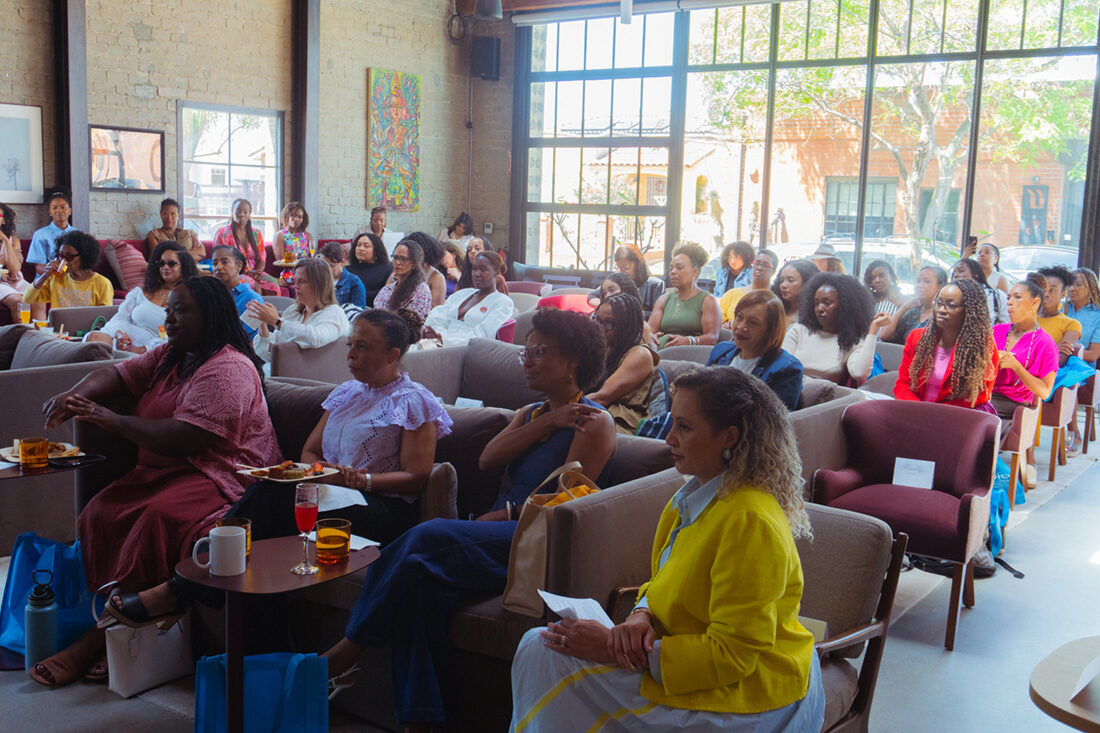
Guests gather in Los Angeles for Changing the Story of Black Maternal Health, a convening at the intersection of journalism, policy, and storytelling.
Central to the conversation was a clear reframing: storytelling is not an add-on. It is infrastructure.
Dr. Regina Davis Moss grounded the discussion in the Narrative Power for Justice Initiative, a multi-year effort to close the gap between dominant narratives and the lived realities of Black women, girls, and gender-expansive people. The work goes beyond identifying harmful tropes. It focuses on building a new narrative standard that aligns culture, research, and policy.
When narratives misrepresent Black women’s experiences, they limit what solutions are considered possible. When they are accurate and expansive, they create the conditions for more responsive policy and care.
Telling Fuller, Truer Stories

L–R: Dr. Regina Davis Moss, Sydney Kamlager-Dove, Mara Brock Akil, Holly Mitchell, and Nicole Jefferson Asher share a moment of connection and joy during the panel discussion.
Mara Brock Akil brought a cultural lens to the conversation, reflecting on her commitment to telling stories rooted in the fullness of Black women’s lives. From Moesha to her current work supporting writers, her storytelling centers dignity, complexity, and truth.
Panelists emphasized that storytelling shapes not only how others see Black women, but how Black women see themselves. When narratives create space for safety and authenticity, they allow people to make decisions without shame and to imagine different futures.
At a time when diversity efforts in Hollywood face ongoing challenges, the conversation pointed to the continued need for stories that move beyond stereotypes and reflect the breadth of Black life.
Bridging Journalism, Culture, and Policy
The conversation also highlighted the role of journalism in shaping public understanding of Black maternal health. Media coverage does more than report on disparities. It helps define them.
Across platforms, from newsrooms to writers’ rooms, storytelling influences what audiences understand and what they believe is worth addressing. When journalists, creators, and policymakers align around more accurate and human-centered narratives, the impact is amplified.
The Path Forward

L–R: Dr. Regina Davis Moss, Sydney Kamlager-Dove, Mara Brock Akil, Nicole Jefferson Asher, and Holly Mitchell following the panel, reflecting a shared commitment to advancing Black maternal health through narrative and policy.
The throughline of the conversation was clear. Cultural representation and policy change are deeply connected forces that must move together.
Through the Narrative Power for Justice Initiative, In Our Own Voice is advancing a model that reflects this reality, integrating lived experience, cultural storytelling, and policy strategy.
At a time when reproductive autonomy and healthcare access face increasing threats, the ability to define and share our own stories is urgent. Because the stories we tell shape the policies we build, and ultimately, the lives of Black women and families.