How Black Storytellers Are Shaping Culture, Policy, and Possibility
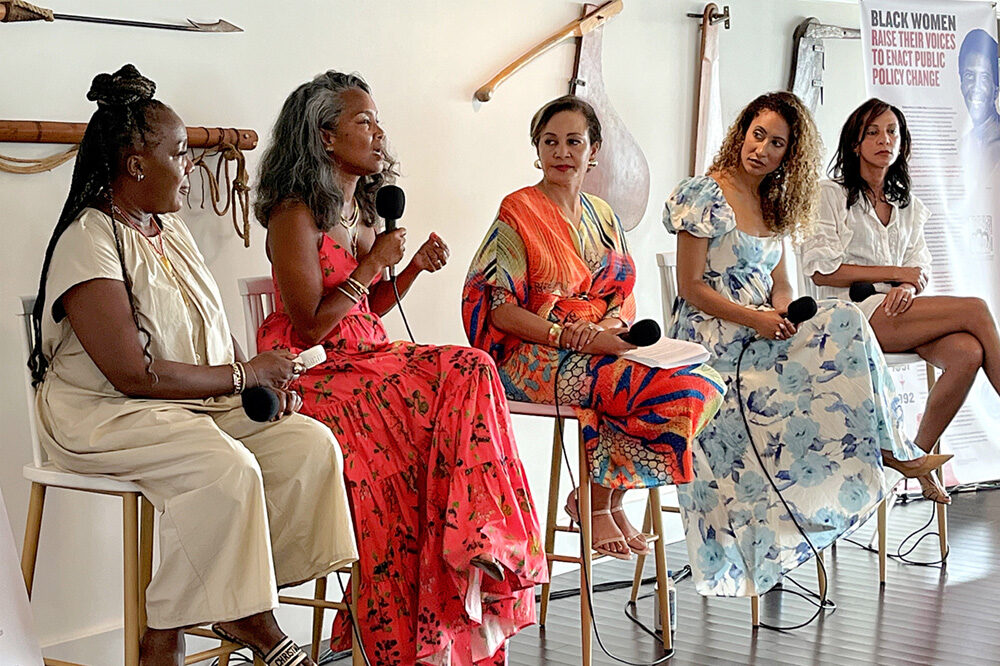
Dr. Regina Davis Moss (center) moderates “Representation in Film and Media: Centering Our Stories, Advancing Our Justice” at the Building Reproductive Justice Power Brunch on Martha’s Vineyard.
As attacks on Black history, bodily autonomy, and truth-telling intensify across the country, who controls our stories — and how they are told — has never mattered more.
At In Our Own Voice, narrative power is not separate from reproductive justice. It is central to it. That belief came to life during our second annual Building Reproductive Justice Power convening on Martha’s Vineyard, where we convened cultural leaders, storytellers, and movement builders for a powerful conversation on Representation in Film and Media: Centering Our Stories, Advancing Our Justice.
Moderated by In Our Own Voice President & CEO Dr. Regina Davis Moss, the panel explored how film, television, journalism, and cultural institutions shape public understanding of Black women’s lives — including our relationships, families, care experiences, and reproductive autonomy.
Why Representation Is a Reproductive Justice Issue
While policy attacks and rollbacks continue nationwide, culture remains one of the most powerful battlegrounds for justice.
When Black women and gender-expansive people are fully seen, heard, and centered in media:
- We challenge harmful stereotypes
- We expand what the public believes is possible and deserving
- We reclaim narrative authority over our bodies, families, and futures
Representation, as this conversation made clear, is not just about visibility. It is a force for transformation — and for justice.
A Cross-Generational Conversation with Cultural Leaders
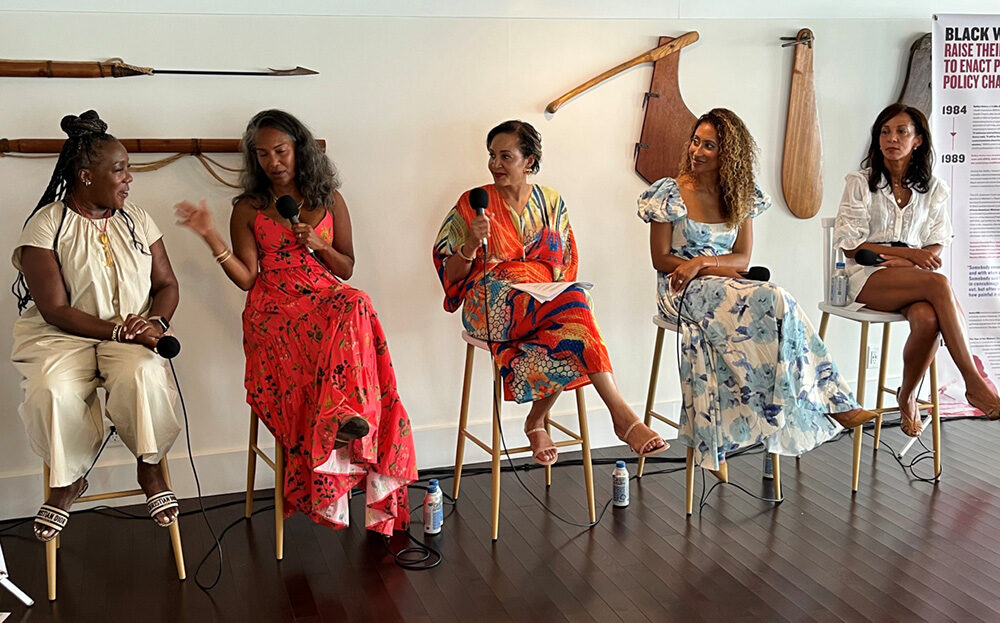
L–R: Stephanie Tavares-Rance, Mara Brock Akil, Regina Davis Moss, Elaine Welteroth, and Maisha Closson dive into the emotional truth of their work illuminating why storytelling is not just art, but a form of justice.
The panel featured four extraordinary leaders whose work has shaped how Black stories are told across generations and platforms:
- Mara Brock Akil, legendary writer and producer, spoke about creating space for complex, joyful, and vulnerable portrayals of Black women and girls — from Moesha and Girlfriends to Forever — and how storytelling can open doors for real conversations about intimacy, agency, and care.
- Elaine Welteroth, journalist, author, and founder of birthFUND, shared how media and journalism can be used as tools for justice, especially in shaping narratives about Black birth, care, and leadership.
- Maisha Closson, writer and showrunner, discussed portraying Black women not just as survivors of harm, but as fully autonomous people with agency over their bodies and futures.
- Stephanie Tavares-Rance, Co-Founder of the Martha’s Vineyard African American Film Festival, reflected on building one of the most important Black cultural institutions in film — and the responsibility of curators and gatekeepers to protect authentic storytelling.
Together, the panelists examined how storytelling intersects with Reproductive Justice — from depictions of sexuality and family to narratives about survival, healing, and liberation.
Narrative Power in Practice
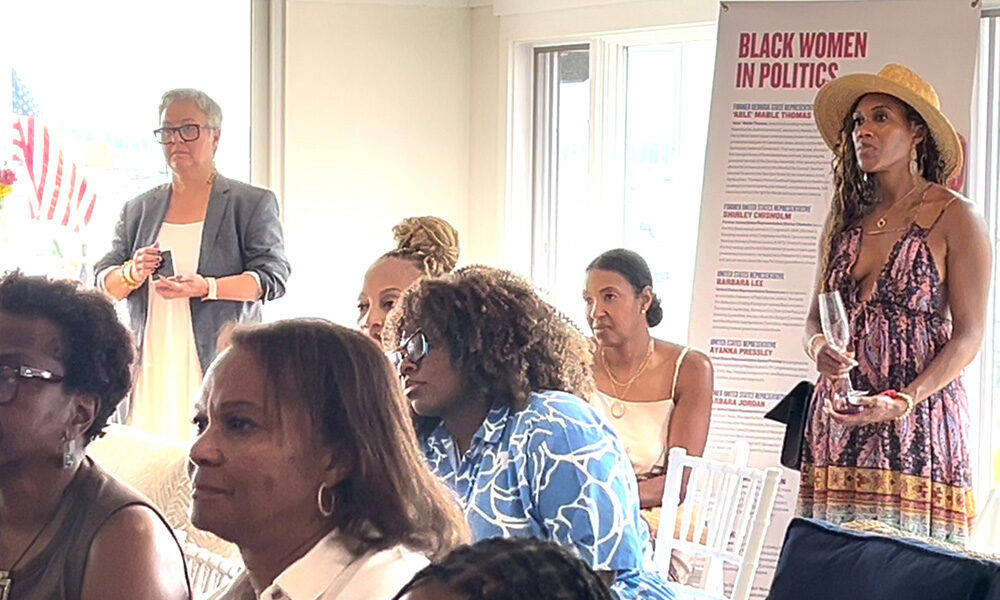
A room full of guests showing up for honest conversation about how our stories are told — and why it matters.
The conversation was intentionally designed to be interactive, reflective, and rooted in lived experience. Audience members were invited into the dialogue through questions and a closing round where panelists shared one word that captured what true representation means to them.
Throughout the discussion, one theme remained constant:
Stories shape culture. Culture shapes policy. And narrative change must happen before — not after — harm occurs.
Why This Matters for Narrative Power for Justice
The Narrative Power for Justice Initiative (NPJI) exists to shift how stories about Black women, families, care, and bodily autonomy are told — and who gets to tell them. It was launched to:
- Elevate Black women’s lived experiences as narrative authority
- Bridge research, culture, and movement-building, so stories do not live in silos
- Convene storytellers, policy leaders, and organizers in shared spaces of learning and creation
- Intervene upstream, before harm occurs, in how reproductive health, autonomy, and care are portrayed
In Our Own Voice is frequently called upon to lead, shape, and convene conversations at the intersection of representation and reproductive justice — because narrative power is not optional. It is essential.
As Dr. Regina Davis Moss shared in closing:
“When we tell our stories with care — by us, for us — we reclaim not only how the world sees us, but how we see ourselves.”
Conversations like this are not one-time moments. They are part of a long-term strategy to build narrative power in service of Reproductive Justice. Through the Narrative Power for Justice Initiative, In Our Own Voice continues to convene, research, and collaborate with storytellers, cultural leaders, and movement partners to shape stories that move culture — and make policy change possible.
We look forward to continuing this work in partnership with those committed to advancing justice through culture, research, and storytelling.